

As stablecoins continue to address practical challenges and improve efficiencies across different use cases, Mastercard and Circle are expanding their partnership to enable settlement in USDC and EURC for acquirers in Eastern Europe, the Middle East, and Africa (EEMEA).
This initiative marks the first time the acquiring ecosystem in EEMEA will be able to settle transactions in stablecoins, connecting blockchain-based assets with traditional commerce infrastructure.
Arab Financial Services (AFS) and Eazy Financial Services will be the first acquirers to adopt the settlement option.

The arrangement will allow institutions to receive settlement in USDC or EURC, fully reserved stablecoins issued by regulated Circle affiliates, which can then be used to settle with merchants.
This builds on existing work between Circle and Mastercard in the region, including crypto card programmes such as Bybit and S1LKPAY that use USDC for settlement.
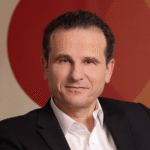
“This is a key move for Mastercard. Our strategic goal is to integrate stablecoins into the financial mainstream by investing in the infrastructure, governance, and partnerships to support this exciting payment evolution from fiat to tokenised and programmable money. Through our expanded partnership with Circle, we are taking bold steps in integrating their innovative use across our global network,”
said Dimitrios Dosis, President for Eastern Europe, Middle East, and Africa at Mastercard.

“Expanding USDC settlement across Mastercard’s vast network of acquirers in Eastern Europe, the Middle East, and Africa is a pivotal step toward truly borderless, real-time commerce. Our expanded partnership with Mastercard will enable wider reach, global access, and scaled impact, so that USDC can become as ubiquitous as traditional payments. Together with Mastercard, we are advancing the role of stablecoins as a foundational tool for everyday financial activity worldwide,”
said Kash Razzaghi, Chief Business Officer at Circle.
Mastercard continues to explore regulated use cases for stablecoins globally, with a portfolio that includes Paxos’ USDG, Fiserv’s FIUSD, and PayPal’s PYUSD, alongside USDC.
The company is also working on applications in remittances, B2B payments, and payouts to gig workers and creators through services such as Mastercard Move and the Multi-Token Network (MTN).
Its infrastructure, including Crypto Credential and Crypto Secure, is designed to ensure stablecoin transactions meet regulatory and security requirements.
As adoption grows in the EEMEA region, Mastercard’s focus remains on regulatory alignment, scalability, and practical applications for stablecoins.
Featured image credit: Edited by Fintech News Middle East, based on image by pikisuperstar via Freepik
