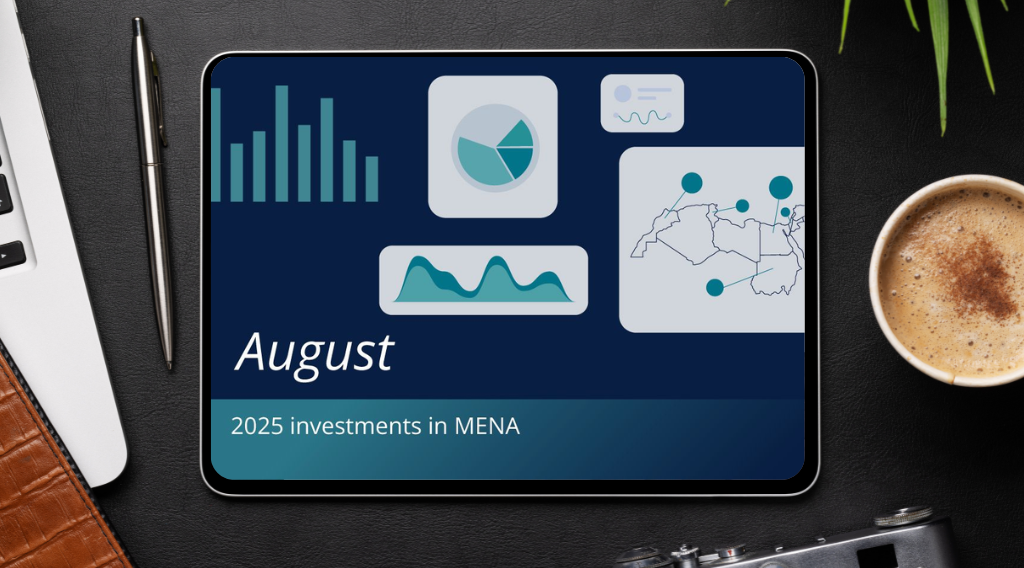

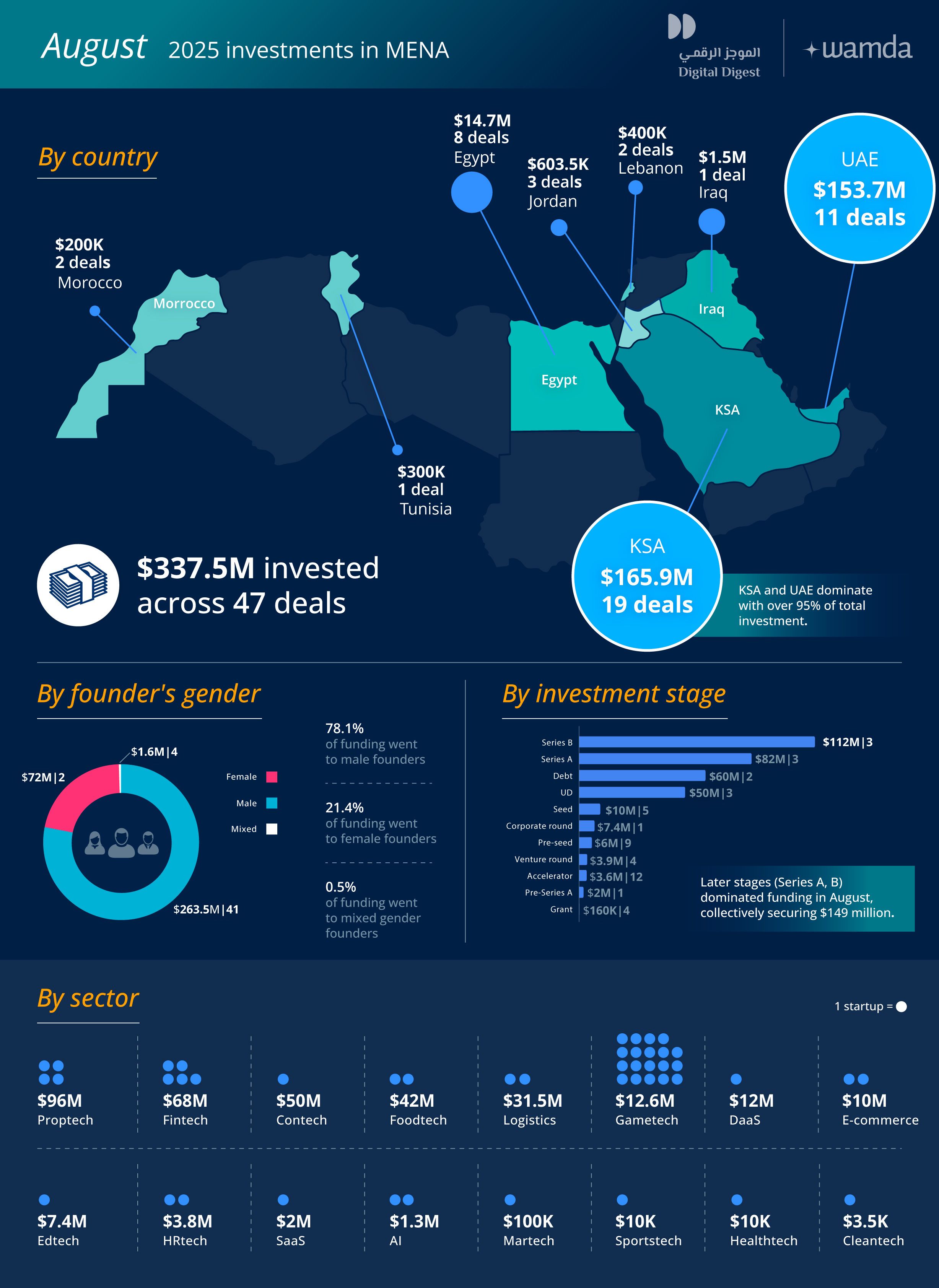
Startup funding in the Middle East and North Africa (MENA) fell sharply in August, with 47 startups raising US$337.5 million.
The figure is down 57% from July’s record of US$783 million but remains 74% higher than a year earlier.
The decline reflects a recalibration after large-scale deals in July, with August activity concentrated in Saudi Arabia and the UAE, while sector strength shifted towards property technology and construction technology.

For the second month in a row, Saudi Arabia led the region, attracting US$166 million across 19 deals.
The UAE followed with US$154 million raised by 11 startups.
Egypt, typically among the top three ecosystems, continued to face challenges, securing only US$14.7 million across eight startups.
The country slipped further behind regional peers, extending a slowdown that began in July.
Iraq, which had moved into third place the previous month, fell back to fifth with a single US$1.5 million deal, while Morocco retained its position in the top four.
Property technology raised the most, with US$96 million secured across four deals, reflecting ongoing investor interest in real estate solutions.
Financial technology followed with US$68.3 million across five transactions, showing signs of recovery.
Construction technology ranked third, supported by MYCRANE’s US$50 million raise, while the gaming sector entered the top five.
Saudi investors contributed US$12.6 million to gaming startups, signalling the country’s increasing ambitions in digital content and gaming.
Later stage deals accounted for the majority of funding.
Three Series B rounds brought in US$112 million, followed by three Series A rounds worth US$82 million.
Debt financing contributed US$60 million, or 18% of the total, while early stage activity declined, with 31 startups raising only US$22 million.
The trend indicates that investors are prioritising scale-ups over early stage ventures.
Business-to-business models accounted for the largest share, with 32 startups securing US$180 million.
Business-to-consumer companies raised US$116.9 million across nine deals, while the remainder went to mixed models.
The shift suggests investors are focusing on revenue-driven businesses with clearer pathways to monetisation.
Male-led startups received US$263.5 million across 41 deals.
Female-led ventures, however, saw a notable increase, raising US$72.3 million across two deals, involving Saudi-based Gathern and Phys.
Mixed-gender founding teams attracted US$1.6 million.
While the overall gap remains, these transactions represent a significant milestone for women entrepreneurs in the region.
Featured image credit: Wamda
