



In the traditional corridors of finance, regulation is often synonymous with friction – a necessary brake on the wheels of commerce to prevent them from spinning out of control.
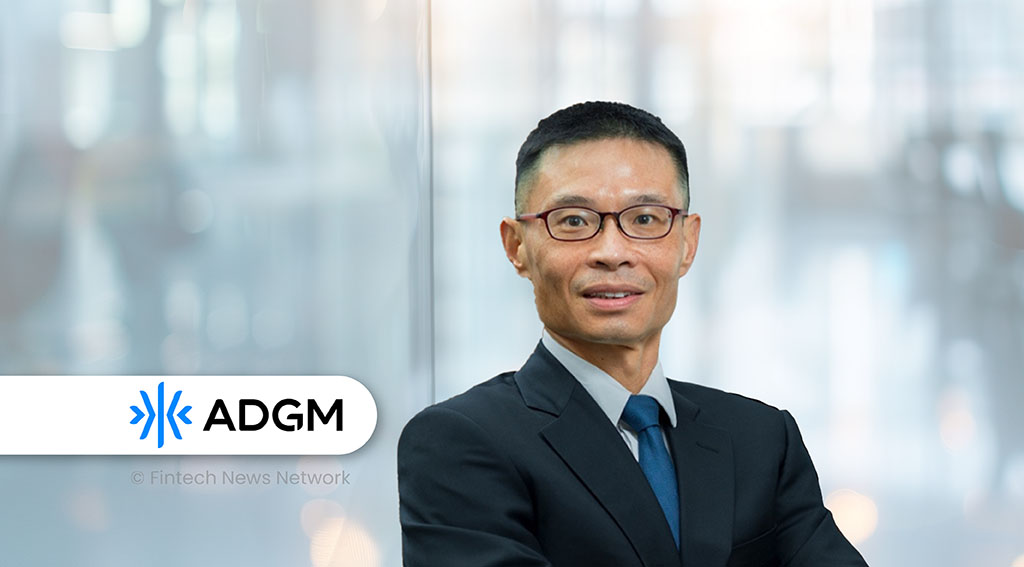
But for Wai Lum Kwok, Senior Executive Director at the Financial Services Regulatory Authority (FSRA) of ADGM, the international financial centre of Abu Dhabi, the Capital of the UAE, regulation can be a powerful enabler for growth and innovation.
Widely recognised for steering ADGM’s digital transformation and its broader fintech strategy, he has been instrumental in shaping initiatives such as the Regulatory Sandbox (a sandbox environment for new business models), the digital enhancement of ADGM’s supervisory tools, and key frameworks spanning venture capital, private financing and virtual assets: work that has helped position ADGM’s FSRA among the Middle East’s most progressive regulators.
When asked about his North Star for balancing innovation with risk mitigation, Wai Lum shares that he has one grand regulatory philosophy he adheres to.
Regulation Should Help Finance Flourish

“It goes back to asking the question of why we regulate. Yes, we protect investors and the financial system, but why do we do that?”
For him, the answer is straightforward: financial services exist to support the economy. Without a healthy financial system, an economy cannot function, develop, or grow sustainably.
Regulation, then, is not meant to restrain the industry but to help it flourish without harming investors or destabilising the system.
“If our regulation results in a stagnation of the financial services sector, then that defeats the purpose,” he explained.
This philosophy shapes how he approaches innovation. Instead of beginning with risk templates and forcing new ideas to fit into them, he starts by asking what benefit the innovation brings: whether it improves people’s lives, expands consumer choice, improves efficiency, or strengthens regulatory outcomes.
“If that is the outcome, then my starting point will be, yes, I want to support the innovation.”
Then comes the question of safeguards. Risks are not ignored, but addressed after the value is identified, a reversal of the default regulatory instinct. As he put it, regulators should make room for promising ideas and then build the rails that allow them to run safely.
Keeping Pace with Breakneck Growth Without Lowering the Bar
As one of the fastest-growing financial centres in the MEASA region, ADGM has seen financial firms surge by 135% percent in 42 months. When asked how a regulator manages an authorisation pipeline under that kind of pressure without compromising standards, Wai Lum acknowledged the challenge upfront.
Growth at roughly 30% YoY creates what he described as a “happy problem”. Technology, he said, is a critical pillar which FSRA leverages to achieve better outcomes.
Automation, productivity tools and especially AI support FSRA’s ability to boost efficiency and process effectiveness. But technology is one layer of many things.
The organisation itself must constantly look to improve, calibrate and streamline processes to make things effective, which depends on the complexity of the issues. Straightforward cases, for instance, may follow a simplified path, while more complex matters receive deeper scrutiny, a balance that preserves speed without diluting rigour.
Consistency of outcomes, however, remains non-negotiable.
Wai Lum pointed to governance structures, maker-checker mechanisms and internal review layers as essential foundations. “Those are basics,” he noted, scaffolding that ensures quality and discipline.
What is less visible, but in his view even more essential, is the culture and the people behind the system.
The drive to “continuously improve, to do more with less, to bring out the best,” is what sustains operational excellence.
A public sector regulator, he said, must have a genuine desire to help facilitate economic growth and thereby the industry, allowing it to scale while keeping the system safe. Ultimately, it comes down to judgment; the ability and confidence to make difficult calls while focusing on the risks that truly matter. Identifying the key risks, he emphasised, requires human discernment.
“Focusing on the key risk(s) requires human judgement, and that requires the people aspect that processes, structures, and systems will not fix.”
Why ADGM’s Common Law Foundation Matters
ADGM’s appeal to institutional players such as BlackRock and UBS is not incidental. A core part of its long-term proposition is its status as the first jurisdiction in the region to introduce the direct application of English common law, a deliberate choice shaped by listening to stakeholders and learning from other international financial centres.
Wai Lum explained that this approach immediately brings more than 200 years of English case law into play.
“It gives a lot of reference points and confidence for investors looking to invest in the centre. Even if there might be no explicit rules around a certain application, looking at centuries of proven and trusted case law creates a useful reference point for judges, legal practitioners and investors.”
In situations where explicit rules or regulations may not yet exist, the availability of centuries of common law precedence offers grounding, continuity and a well-understood basis for legal reasoning. This, he noted, is a critical source of confidence for institutions evaluating long-term commitments in the centre.
Managing Cross-Border Regulatory Issues Will Require Cooperation on Multiple Fronts
Today, the global landscape in crypto regulation is quite uneven and fragmented. When asked what kind of international cooperation regulators will need to manage digital asset cases that move across borders and across chains, Wai Lum began by noting that the current state of divergence is to be expected.
Innovation, he said, rarely evolves in a straight line. Regulators do not (and should not) try to stay ahead of every new development. As new technologies emerge and issues surface, each jurisdiction responds differently based on its own priorities, contexts and risk appetites.
Some move to prohibit certain activities, others choose to monitor, while others decide it is time to regulate. He continues,
“Because of that different starting point,” he explained, “it’s only natural that you have different frameworks adopted by different jurisdictions.”
Digital assets, however, have existed for barely 15 years, a fraction of the time needed for such structures to fully mature. Meaningful global convergence will take time.
“At the G2G level, we continue to make use of platforms to speak to each other and formulate standards to try to achieve harmony and conversions.”
And that’s a positive thing, he shares.
A Structural Shift That Demands Bold Regulation
As the conversation drew to a close, Wai Lum emphasised that the changes unfolding in finance today are not incremental but structural. Technology is rewriting the foundations of how markets operate — from autonomous agents becoming economic participants to collateral moving “at the speed of code.”
“As regulators, we have to start to think about how to deal with this new development, and it has to be pretty bold and adaptive. Things are very different.”
The shifts underway require boldness, fresh approaches and a willingness to rethink long-standing assumptions about supervision, risk and market behaviour.
For him, the message is clear: the industry is entering a fundamentally different era, and regulation must evolve just as decisively.
This conversation offers a preview of the themes that will shape discussions at the Abu Dhabi Finance Week, where regulators, innovators and institutions will converge to explore the future of finance.
Wai Lum is a speaker at the Abu Dhabi Finance Week, as part of a panel discussing “Code, Currency and Courts: Unravelling a Cross-Border Crypto Dispute”.
Featured image: Edited by Fintech News Middle East based on image by FestArt on Freepik
