




In 2025, Morocco accelerated its fintech agenda, introducing new incentives and support mechanisms designed to attract foreign talent, foster collaboration, and stimulate innovation.
In January, the Ministry of Digital Transition and Administrative Reform launched the Morocco Fintech Center to strengthen the startup ecosystem and serve as a one-stop shop for fintech companies. The center provides mentoring, incubation, and skills development programs, while also helping startups navigate regulatory requirements and access funding. At launch, the initiative brought together around 15 banks and financial institutions.
Later that year, in November, the agency partnered with the Mohammed VI Investment Fund, Caisse de Dépôt et de Gestion (CDG), and Tamwilcom to establish an investment mechanism aimed at supporting venture funds focused on startups. This new financial vehicle intends to inject approximately US$269 million (MAD 2.5 billion) into Morocco’s startup ecosystem across sectors including fintech, agri-tech, ed-tech, digital health, and climate tech.

These efforts align with Morocco’s broader Digital 2030 strategy, which aims to foster 1,000 certified startups by 2026 and 3,000 by 2030, while fostering at least 10 high-growth startups and one to two unicorns by the end of the decade.
Together, these initiatives have helped catalyze a vibrant fintech ecosystem, fueling a new generation of ventures that are rapidly scaling, attracting investment, and reshaping key sectors of the economy.
Today, we look at some of these noteworthy startups, highlighting their value propositions, recent achievements, and what they have in store for the year ahead. These ventures are reshaping verticals such as payments, business lending, and digital commerce, and are well worth watching in 2026.
Fintech Startups from Morocco to Follow
Yakeey

Founded in 2023 and headquartered in Casablanca, Yakeey is a technology-enabled real estate platform. The company serves the African market, integrating digital tools with human advisory services to create a transparent, efficient marketplace for buying, selling, and renting property.
At its core, Yakeey operates as an end‑to‑end transactional marketplace that combines property search, valuation, brokerage, and financing. This platform connects buyers, sellers, and financial institutions through a single digital platform, reducing information gaps and streamlining access to data and credit, ultimately expanding formal housing finance, and accelerating loan approvals.
A distinctive feature of Yakeey is its Instant Buying (iBuying) service, offered in partnership with Umnia Bank. Through this service, sellers receive a quick, guaranteed sale at a transparent price via direct purchase agreements, providing a safer and simpler alternative to traditional sales.
Yakeey also offers access to a network of independent real‑estate advisors, known as YakeeyPRO. This network, which had more than 800 agents as of early 2026, delivers personalized, professional support throughout each transaction.
In January 2026, Yakeey raised US$15 million in the Series A round to strengthen and launch new products, scale the digital platform, deepen partnerships with financial institutions, and expand its YakeeyPro network.
Yakeey’s rapid growth, financial backing, and strong partnerships position it as a fast-scaling technology-driven platform poised for momentum this year onwards.
Chari

Founded in 2020 and headquartered in Bouskoura, Chari is a fintech and e‑commerce startup aimed at digitizing informal retail and advancing financial inclusion across Francophone Africa. The company provides retailers with embedded financial services, including payments, micro‑insurance, and working‑capital solutions, while also operating a digital marketplace for consumer goods.
Through its mobile app, Chari allows merchants to order fast‑moving consumer goods (FMCG) from distributors for rapid delivery, digitize cash‑heavy financial flows, obtain instant working capital, and embed insurance and payment functionalities directly into their daily operations. It claims it has onboarded over 20,000 food businesses in Morocco, and has expanded into Tunisia and Ivory Coast.
Last year, Chari was granted a payment institution license by Bank Al-Maghrib, the country’s central bank, becoming the first venture-backed startup in Morocco to receive the permission.
This license allows Chari to offer a full suite of financial services to its existing user base of grocery stores, independent shop owners, retailers, and small and medium-sized enterprises (SMEs), including acquiring services via point-of-sale (POS) terminals and payment gateways, payment accounts, Moroccan IBANs, debit cards, domestic money transfers, international remittances, bill payments, e-government services, and micro-insurance products.
In October, Chari closed a US$12 million Series A. The round, which brought its total fundraising to US$17 million, will be used to scale its operations while developing two strategic verticals: a super‑app for merchants across Morocco and beyond, and a banking‑as‑a‑service (BaaS) platform for corporates and startups that wish to embed fintech solutions.
Chari’s rapid expansion in 2025, coupled with its fresh Series A, and growing merchant network, makes it a fast-growing fintech e-commerce platform worth following this year.
ORA Technologies

Founded in 2023 and based in Casablanca, ORA Technologies is a fintech and e-commerce startup. The company aims to democratize digital access across Morocco by delivering locally‑tailored solutions in fintech, retail‑tech, and e‑commerce.
ORA Technologies offers two main apps: Kooul, a food-delivery service, which has attracted more than 15,000 active clients in the last 10 months thanks to its affordable offers and fair economic model for restaurants and riders; and ORA Cash, a universal mobile wallet enabling users to open a payment account in 15 seconds and perform free and instant money transfers. ORA Cash achieved more than 50,000 accounts in five months, reflecting strong uptake.
In July 2025, ORA Technologies closed a US$7.5 million Series A, bringing its total to US$11.9 million. Later that year, in November, the company teamed up with Azur Innovation Fund to acquire Cathedis, a leading national player in e-commerce logistics and last-mile delivery.
This acquisition marked the first consolidation among Moroccan startups financed entirely with local capital and positioned ORA Technologies as a central player in the country’s e-commerce and digital landscape.
With the integration of Cathedis, ORA Technologies is now working on deploying a unique digital model that blends fintech, food‑tech, and e‑commerce logistics, reinforcing its ambition to become the backbone of Morocco’s digital commerce landscape.
ORA Technologies’ strong uptake, acquisition of Cathedis, and fresh capital make it a prominent player in the Moroccan fintech and digital commerce landscape to watch this year.
Woliz
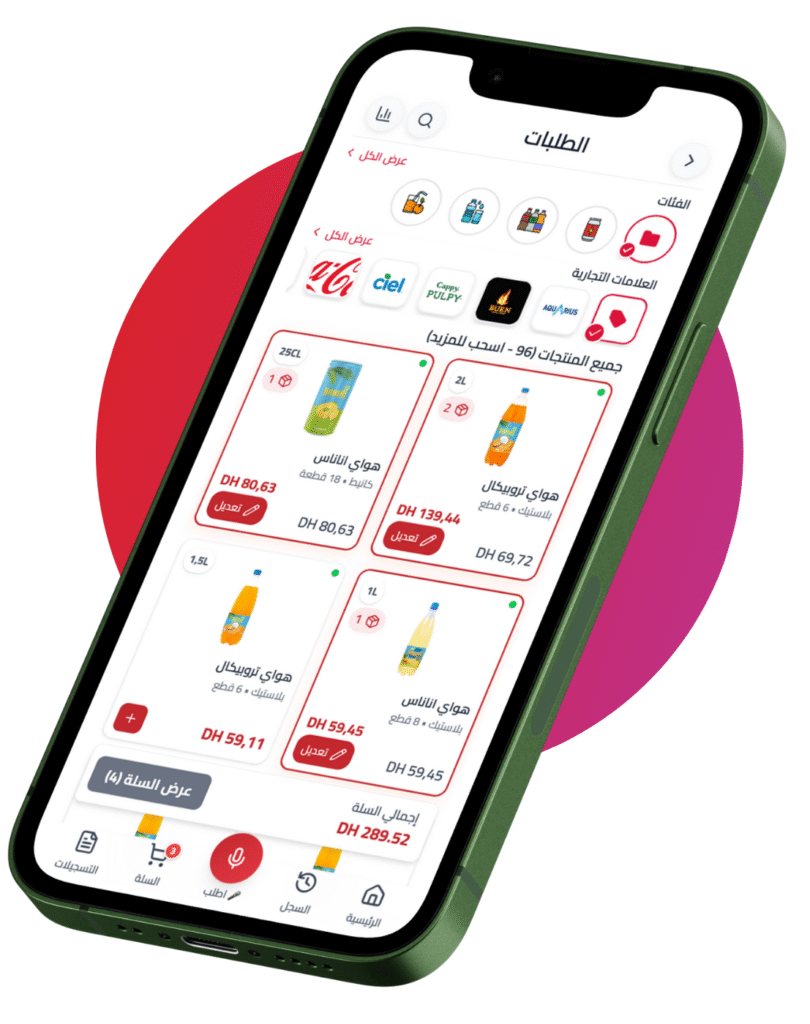
Founded in 2025 and headquartered in Casablanca, Woliz is a retail-tech platform designed to connect nanostores to the digital economy. It equips small neighborhood shops with an all‑in‑one solution that combines artificial intelligence (AI)‑driven software, modern hardware, and on‑the‑ground support, to help small retailers manage their stock, track their sales, and connect directly with suppliers and financial institutions.
Through Woliz, merchants can accept secure digital payments, access credit and other financial services, and streamline restocking by linking straight to suppliers. They also gain access to sales tracking and inventory management tools, and get to run personalized loyalty programs, improving consumer engagement.
Woliz claims it serves more than 55,000 small businesses, with a gross merchandise volume (GMV) of US$50 million.
In August 2025, Woliz was selected for Visa’s fourth Africa Fintech Accelerator, joining 22 startups from 12 African countries in a three‑month program that provides mentorship, training on business digitization, lending, cross‑border payments, AI‑powered payments, social commerce, climate insurance, and neobanking, as well as access to funding and networks.
In December, it closed a US$2.2 billion pre-Seed funding round to strengthen its technological and organizational infrastructure to support a wider rollout. A key priority will be to intensify the on-the-ground deployment of its solution, bringing more merchants onto the digital platform.
Woliz’s rapid merchant uptake, participation in Visa’s Africa Fintech Accelerator, and its freshly raised capital position it as a fast‑scaling retail‑tech platform poised for continued momentum this year.
Alya
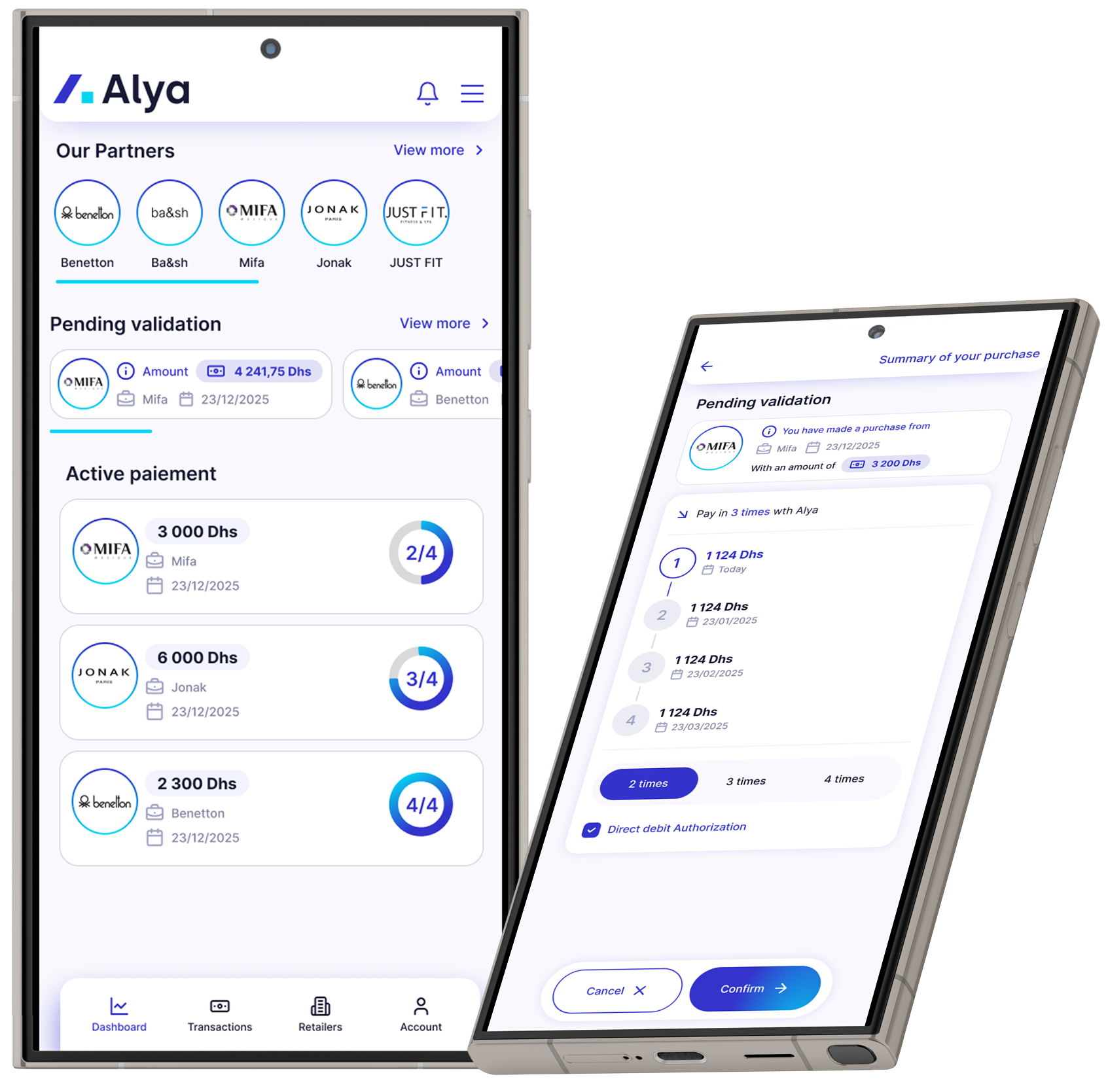
Launched in 2022 and based in Casablanca, Alya is a buy now, pay later (BNPL) platform that lets shoppers split their purchases into monthly installments without incurring interest or fees. The company’s mission is to democratize access to credit for both individual consumers and the country’s large base of underserved SMEs.
With Alya’s offering, consumers can split purchases into two to four interest-free payments directly at checkout, either online or in-store. For SMEs, this means tapping into new customer segments and improving cash flow without navigating traditional bank loans that often come with high hurdles and long wait times.
The technology integrates directly into POS and e‑commerce platforms, allowing customers to choose installments without leaving the checkout flow. This seamless experience reduces friction, boosts conversion rates, raises average ticket sizes, and strengthens customer loyalty.
Alya was the first BNPL firm to receive formal authorization from Bank Al-Maghrib back in 2024. At launch, it partnered with several hundred merchants across both physical retail and online storefronts. The solution is also integrated into the Interbank Electronic Payment Center (CIM), strengthening its operational framework.
The BNPL sector in Morocco is currently estimated at MAD 15-20 billion (US$1.6-2.2 billion), with forecasts pushing that figure as high as US$5 billion by 2030, reflecting strong demand for flexible financing among the country’s young, digitally active population, according to Alya founder and CEO Brahim Zaid.
In early 2025, Alya secured its first round of funding as it seeks to expand regionally. Backers included Proparco via the Digital Africa venture fund, US-based VC firm Plug and Play, and MFounders, a fund created by members of the Moroccan diaspora to support homegrown innovation with global horizons.
Alya’s regulatory approval from the central bank, and early 2025 funding from top investors position it as a fast‑scaling fintech poised to capture a growing share of Morocco’s emerging BNPL market in 2026.
Featured image: Edited by Fintech News Middle East, based on image by user5742774 via Freepik
