




Across Africa, financial institutions are increasingly viewing small business banking as a key growth driver, with more banks turning to digital platforms, data analytics, and partnerships, to better serve small and medium-sized enterprises (SMEs).
A new study by Backbase polled more than 200 senior banking executives across 40 African countries, and found that SME banking is fast becoming a strategic priority across the region’s financial sector. According to the survey, 26% of banks now cite SMEs as a primary focus, up from 19% in 2022, signaling a clear rise in attention to this segment.

SMEs form the backbone of Africa’s economy, representing about 95% of businesses, 40% of GDP, and more than half of all employment. Across the Middle East and Africa, this sector is growing at an estimated 4% annual growth rate, double the global average.

However, despite their critical role, many SMEs still lack access to tailored financial services, representing a significant untapped opportunity for banks and other financial provides.
Recognizing this potential, 83% of the bank surveyed now describe the SME segment as either very or extremely important and are planning significant or major investments in SME service provision.
Leveraging digital platforms and data analytics
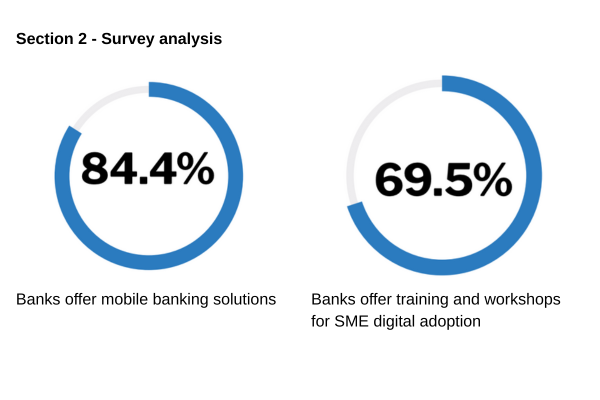
To capture these opportunities, a growing number of African banks are embracing mobile technology and digital platforms to better serve SMEs. A massive 84.4% of the banks polled by Backbase and African Banker now offer mobile banking services to SME customers, with nearly all major players providing digital SME products via mobile or online channels.
Additionally, 47.7% of African banks now offer digital lending, signaling growing maturity in digital SME finance.
Many institutions are also leveraging data-driven tools for risk management. In Nigeria, fintech startup Moniepoint collects payment and transaction‐data from its SME customers as they accept digital payments and use its business tools, then uses that data to build credit‐profiles and assess business health in order to offer conditional working‐capital loans. It also uses analytics and machine learning (ML) to improve underwriting, risk assessment and to tailor its product offerings.
In Kenya, the Hustler Fund, launched by the government in 2022, uses AI-driven credit scoring to deliver accessible, low-interest microloans to small business owners.
Partnerships drive SME banking innovation
Industry collaboration is also playing a crucial role in expanding SME banking across Africa. For example, payment unicorn Flutterwave has joined forces with the likes of PayPal and South African telecommunications provider MTN to help African SMEs access international markets and accept payments via mobile money wallets and digital wallets.
Similarly, South African banking technology provider Jumo has partnered with a number of banks, mobile money operators and payments providers, to provide SMEs and entrepreneurs in Africa with greater access to credit and savings products.
Improving digital literacy
Despite strong progress and opportunities, several challenges remain to SME digital banking, particularly limited digital literacy. To bridge this gap, 69.5% of surveyed banks are offering training and workshops, while 62.5% are providing dedicated SME customer support for digital banking. Additionally, 43.8% offer online resources and tutorials, and many also offer financial incentives and partnerships with tech providers to encourage uptake.
Despite claims that young Africans are inherently “digital natives,” advanced digital fluency remains low across the continent. In 2021, African countries scored between 1.8 and 5 out of 10 on the Digital Skills Gap Index, far below the global average of 6. Of the world’s 20 countries with the weakest digital skills, 12 were in Africa, and only 11% of Africa’s tertiary education graduated have formal digital training.
According to the International Certification of Digital Literacy (ICDL), only 50% of African countries include “computer” skills in their school curriculum, compared to a global average of 85%. As a result, an estimated 90% of children in Africa reportedly leave school without basic digital skills.
Featured image: Edited by Fintech News Middle East, based on images by rawintanpin and nastiklis1992 via Freepik
