



As central banks in the US and Europe shift from tightening to measured easing, Dubai’s real estate market has shown resilience, supported by solid fundamentals.
Disciplined regulation, strong liquidity, and a high proportion of cash transactions have helped the market remain stable even as international investors adopt a more selective approach.
Elite Merit Real Estate analysis shows that cash buyers accounted for around 54% of residential property transactions in the second half of 2025.

This figure underscores the dominance of liquidity-driven purchases.
After two years of high global borrowing costs, central banks in the US and Europe have signalled a cautious easing.
The average 30-year mortgage rate in the US has fallen to roughly 6.2%, its lowest level since early 2023, while European borrowing costs are also trending downwards.
In the UAE, the Central Bank reduced its overnight base rate from 4.15% to 3.90% in October 2025, following a previous cut in September.
Leading banks now offer home-loan interest rates between 3.75% and 4.99%, which is expected to support mortgage activity and make financing more accessible to buyers.
Global investment is moving away from speculative leverage, favouring jurisdictions with strong governance and transparency.
In this context, Dubai continues to record high transaction volumes and stable valuations.
Cash-driven deals limit interest rate exposure, and off-plan projects with guaranteed yields continue to attract investors.

“While borrowing costs in the UAE are expected to ease gradually, the real driver of momentum is confidence,”
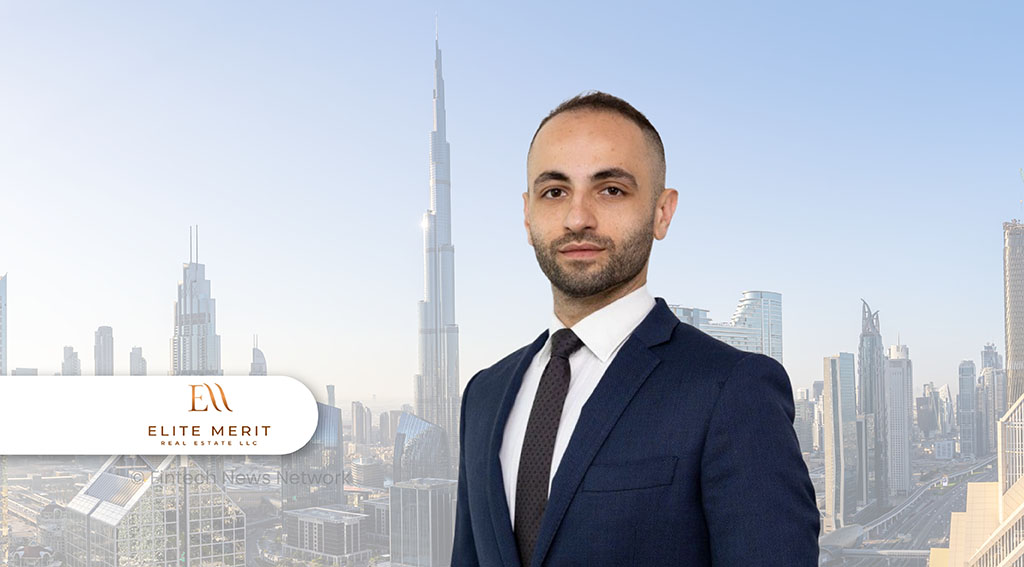
said Elkhan Salikhov, CEO of Elite Merit Real Estate.
“Dubai remains closely linked to global capital cycles, yet its strong governance, dollar peg, and fully digitalised property systems continue to draw institutional investors from Europe and Asia seeking predictable value. In today’s environment, trust has become the ultimate currency, and Dubai’s balance of liquidity, regulation, and transparency ensures it continues to outperform.”
Elite Merit analysts expect that global liquidity returning in 2026 will support steady, rather than speculative, growth.
Confidence, rather than leverage, is likely to define the next investment cycle, with structural discipline and sustainable value creation at its core.
Featured image credit: Edited by Fintech News Middle East, based on image by Mark Mainka via Freepik
