




Turkey is home to the fastest-growing startup ecosystem in Europe, the Middle East and Africa (EMEA), with fintech emerging as one of the most dynamic verticals.
Turkey’s combined startup ecosystem value now surpasses EUR 40 billion, growing by a staggering ninefold between 2019 and 2024, according to a 2025 report by the Digital Transformation Office (DTO) of the Presidency of the Republic of Turkey and Dealroom. This growth rate outpaces many regional peers, including Saudi Arabia at 6.9x, and the United Arab Emirates (UAE) at 3.3x, and even the UK at 2.1x, reflecting strong domestic demand for digital services and expanding access to capital.

Turkey’s vibrant startup ecosystem counts more than 1,000 venture capital-backed companies. Enterprise software currently leads the market with 170 ventures, but fintech follows closely with 160, highlighting the sector’s growing importance.


Turkey’s fintech industry has recently entered a new phase of maturity, marked by the emergence of its first unicorns. Papara, a leading neobank and payments platform, surpassed a US$1 billion valuation following its acquisition of Rebellion from Beka Finance in a multi-million dollar cash-and-stock deal.
The market is also witnessing several strategic exits. Notable transactions include the acquisition of business financial management startup Norma by Pionr, and the purchase of investment platform Finfree by Papara, both deals in 2024. These transactions demonstrate growing consolidation within the ecosystem and point to a more mature environment.
As Turkey’s fintech industry continues to expand and evolve, several startups are standing out for their growth, product innovation, and market momentum, and are well worth watching closely in 2026. These ventures, which operate across digital banking, payments, but also wealthtech, and embedded finance, are attracting prominent investors, achieving meaningful scale, and shaping the future of Turkey’s financial services industry.
Turkey’s Leading Fintech Startups
Param
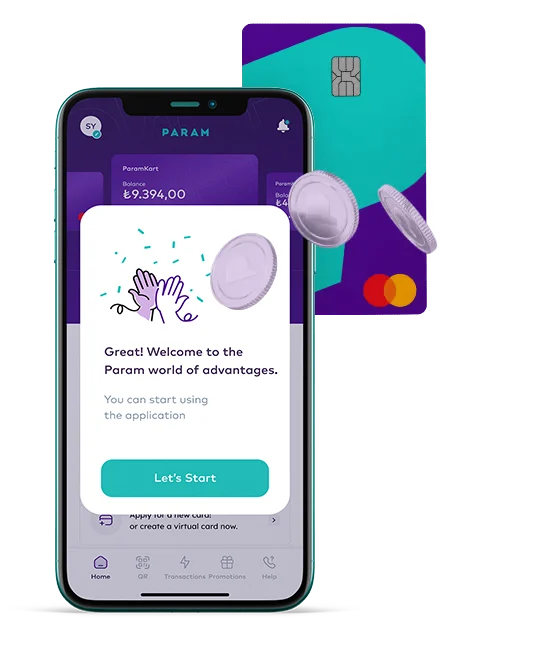
Param is Turkey’s first licensed electronic money institution. Since 2014, the company has delivered integrated financial services across acquiring, issuing, processing, loyalty, and lending, serving business-to-consumer (B2C), business-to-business (B2B), and business-to-business-to-consumer (B2B2C) customers with end-to-end payment and financial solutions.
Param’s core products include ParamKart, a prepaid card brand with more than 13 million services and over 160 co-branded programs; and ParamPOS, a payment infrastructure used by over 100,000 merchants for online and offline payments.
In Q1 2025, ParamKart recorded 63 million transactions, totaling TRY 36 billion (US$830 million), while ParamPOS processed 287 million transactions, totaling TRY 347 billion (US$8 billion).
Over the past years, Param has strengthened its capabilities through strategic acquisitions, including EÇözüm (currently operating as Finrota) for online collections and open banking transactions, Twisto for buy now, pay later (BNPL) capabilities in the Czech Republic and Poland, Univera for sales and logistics software, Nebim Yazılım for retail ERP solutions, and Paycore for payment infrastructure for banks.
The company is also expanding internationally with operations in the UK under the banner of Param UK, and Param Holdings International, established in the Netherlands.
Colendi
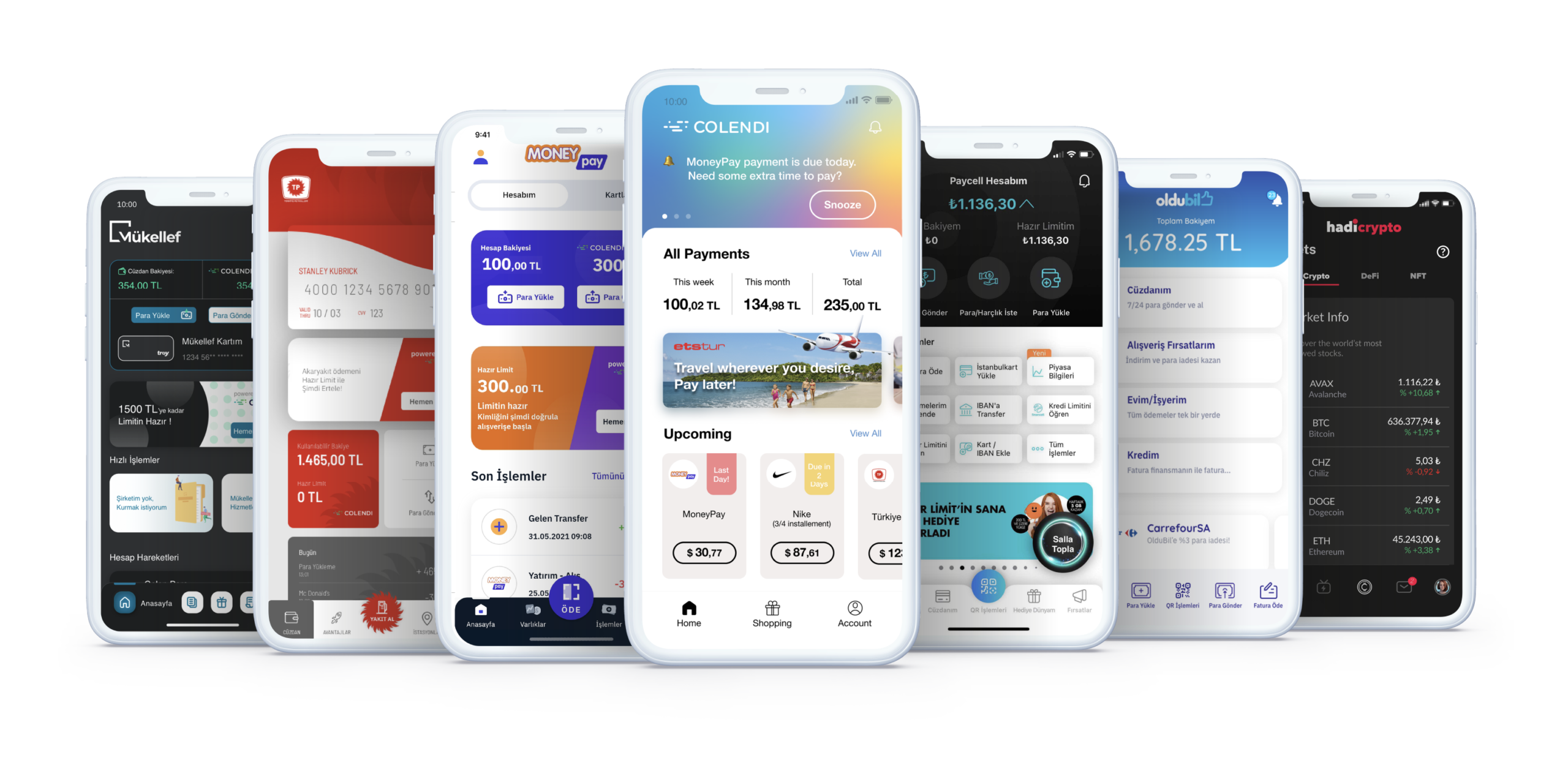
Founded in 2018, Colendi provides embedded fintech services designed to democratize banking services for consumers, merchants, financial and non-financial institutions, helping partners overcome the limitations of legacy banking systems. Through its marketplace and joint ventures, the company provides financial solutions, including banking, credit, payment, and investment services, to more than 7 million users, facilitating over 5 million credit transactions.
Colendi also has a subsidiary named ColendiBank, an artificial intelligence (AI)-based, natively digital deposit bank. ColendiBank, which received its operating license from the Banking Regulation and Supervision Agency (BDDK) in 2024, began operating in March 2025, offering fully digital services including accounts, payments, transfers, lending, deposits, BNPL, securities, and insurance products, delivered through a mobile-first, AI-powered infrastructure. ColendiBank focuses particularly on embedded finance and small and medium-sized enterprise (SME) banking.
Beyond digital banking and embedded finance, Colendi is also expanding into insurance through Colendi Insurance’s COMPI platform, a next-generation digital solution that streamlines quotation, policy management, and claims processes for agencies, brokers, and banks. In the UK, Colendi’s subsidiary SETL provides blockchain and payment technologies.
In May 2024, Colendi secured a US$65 million Series B at a US$700 million valuation to support its expansion across the EMEA, the Gulf Cooperation Council (GCC), and Turkic markets.
Midas

Founded in 2021, Midas is a leading retail investment platform, enabling users to invest easily in US and Turkish stocks, cryptocurrencies, mutual funds, gold, and foreign exchange (FX) with low commission fees. The company also provides free real-time market data and instant, fee-free transfers.
To date, Midas has helped users save nearly US$50 million in transaction fees, with half of its user base starting their investing journey on the platform. Serving 3.5 million users, the company plans to expand its offerings, including margin and savings accounts, options trading, and tools for sophisticated investors. Simultaneously, it is investing in security and operational resilience.
Midas has raised over US$140 million in funding from global investors including QED Investors, International Finance Corporation (IFC), HSG, Spark Capital, QuantumLight, Spice Expeditions LP, Portage Ventures, Bek Ventures, and Revo Ventures. Its latest round was a US$80 million Series B round secured in August 2025.
Fimple
Established in January 2022, Fimple is a cloud-native, composable core banking platform that aims to modernize financial services for banks, fintech startups, and credit unions. The platform enables institutions to build, configure, and launch products quickly using a flexible software-as-a-service (SaaS) architecture, API-first infrastructure, and cloud-native microservices.
Fimple’s API-first infrastructure enables quick integration with new banking products, third-party services, and regional expansions, helping institutions adapt to a rapidly evolving financial landscape. A key component of the platform is the Magic Process Designer, a low-code tool that allows institutions to build, customize, and automate workflows without lengthy development cycles.
Fimple serves leading Turkish financial institutions, including Aytemiz Investment Bank, Misyon Bank, Hedef Investment Bank, and Q Investment Bank, and has clients in five additional countries, with established operations in Egypt and the GCC.
The company has demonstrated rapid growth, recording a 3,142% revenue increase over three years, according to Deloitte Technology Fast 50 Türkiye 2025. In February 2025, Fimple raised a US$12 million Series A to accelerate product development efforts and international expansion, particularly into the MENA and the Commonwealth of Independent States (CIS) regions.
Papara
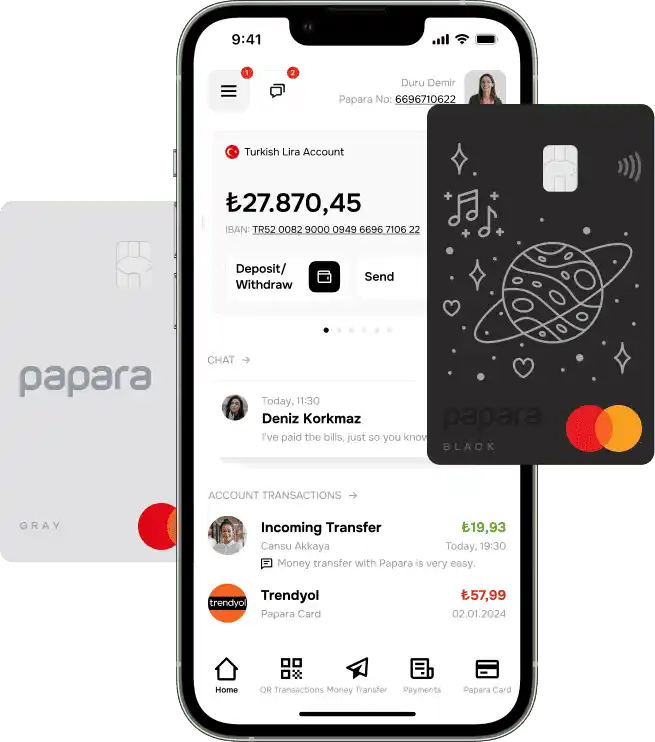
Founded in 2016, Papara is an Istanbul-based electronic money and payment services company. It is one of the country’s largest fintech companies, serving over 23 million users, including 8 million Papara cardholders, and processing 31 million monthly transactions.
Papara offers instant money transfers, prepaid cards, online wallets, and international remittances to more than 100 countries, including EU member states, the UK, the US, and Canada.
The company has also expanded through acquisitions, becoming the majority stakeholder in Spain-based Rebellion Pay and Pakistan-based SadaPay.
In 2025, Papara faced legal and regulatory challenges. An investigation into alleged involvement in illegal betting, money laundering, and criminal organization activities led to the arrest of the company’s owner, Ahmet Faruk Karsli, and 12 executives in May. A court appointed a trustee to oversee management.
In October, the Central Bank of Turkey revoked the company’s operating license, though a December interim decision granted a stay of execution, allowing the company to gradually resume operations.
Sipay

Founded in 2019, Sipay offers an integrated financial marketplace and a wide range of digital payment solutions for businesses and individuals. Sipay’s platform enables companies to monitor and manage their entire financial landscape, access diverse financial options, and make informed decisions. For consumers, Sipay operates an all-in-one app for digital wallets, investments, loyalty programs, embedded finance, FX transactions, and more.
Sipay partners with leading institutions including Visa, Mastercard, Turkish banks, and major e-commerce providers such as Trendyol. The company serves 6.3 million wallet users and 25,000 registered merchants and operates one of Turkey’s largest physical point-of-sale (POS) networks.
Sipay was recognized in both 2023 and 2024 as one of Turkey’s fastest-growing electronic money and payment institutions in Deloitte Technology Fast 50. Last year, it was named among the world’s top fintech companies by CNBC and Statista.
Sipay claims it’s been profitable since 2023, and its revenue has increased more than fivefold year-on-year. The company says it ended last year with run-rate revenue of US$600 million.
In April 2025, the company raised US$78 million in a Series B funding round, claiming a valuation of US$875 million. It will use the proceeds to expand into markets outside of Turkey, offering additional services like remittances.
Like Papara, Sipay was among the targeted electronic money institutions by the central bank last year. In October, certain operations of the company were temporarily suspended, reflecting heightened regulatory scrutiny and a stronger focus on enforcing know-your-customer (KYC) and anti-money laundering (AML) requirements.
Featured image: Edited by Fintech News Middle East, based on image by wirestock via Freepik
