



In the United Arab Emirates (UAE), digital banking has evolved from mere online portals to a highly integrated, AI-driven ecosystem that caters to an increasingly expanding segment of the population. According to a Capco survey, by 2024, nine in ten UAE residents (89%) had digital-first accounts. This figure represents a significant surge compared to the Middle East and Africa (MEA) region’s average digital banking usage of approximately 17% a few years ago, highlighting the rapid adoption of digital banking.
Within this evolving landscape, traditional banks such as Emirates NBD and Mashreq are leading the charge by embracing the digital-only model, developing sophisticated, and introducing innovative products to their customers. New entrants are also emerging, embracing cutting-edge technologies and pushing boundaries in AI-driven personalization, real-time analytics, and open banking integration.
Regulatory bodies are playing a pivotal role in shaping this landscape. The Central Bank of the UAE (CBUAE) enacted a new law in October 2025 that integrates digital assets and digital finance activities into its banking regulatory framework, bringing these activities under the supervision and licensing authority of the central bank. Parallel to this, the launch of CBUAE’s Digital Dirham aims to solidify the UAE’s position as a regional hub for digital finance by facilitating faster, more cost-effective, and inclusive payments, and reinforcing the credibility of the UAE’s monetary framework.

Within this landscape, several digital banks and neobanks are emerging as market leaders. These companies and brands, encompassing both licensed digital banks and independent neobanking startups, are redefining customer relationships and service delivery, and establishing new industry standards.
In this article, we spotlight the most significant and influential players in the UAE’s digital banking landscape, providing an in-depth analysis of these entities. We examine their value propositions, recent advancements, and future prospects.
Top 4 Digital Banks and Neobanks in the UAE
Liv
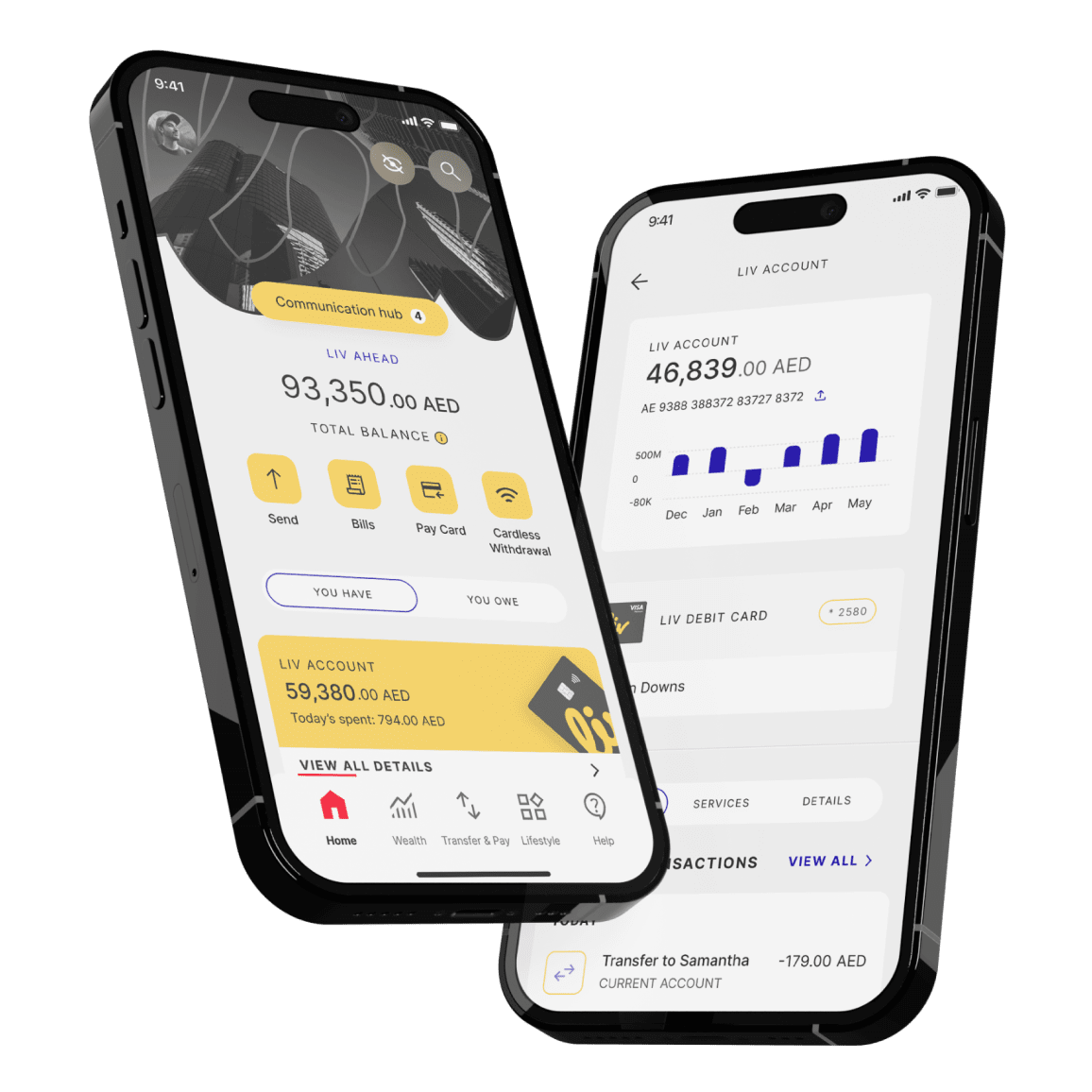
Launched in 2017, Liv is a first digital bank in the UAE designed for the young and digitally savvy professionals looking for banking solutions that complement their fast-paced life. Owned by Emirates NBD, it combines the reliability of an established financial institution with a culture of continuous innovation.
Liv provides a comprehensive digital banking suite delivered through a mobile app that emphasizes speed, transparency, and a broader lifestyle ecosystem. Core services include current accounts, payments, cards, budgeting tools, rewards, insurance, automated savings, UAE equities trading, personal loans, and cryptocurrency services.
Users can open a Liv account within minutes, using only an Emirates ID and passport, without any paperwork. The platform supports multi‑layered verification for secure transactions and provides real‑time alerts, personalized notifications, and easy bill‑payment options for utilities such as Du, Etisalat, DEWA, Nol, and Salik.
With close to half a million users, Liv is one of the biggest digital banks in the UAE. In March 2025, it upgraded its mobile app, launching the Liv X mobile app. The app allows customers to buy, sell, and trade cryptocurrencies while managing everyday finances and making local and international transfers. Additional features include the generation of validated electronic statements, and a focus on wealth growth through digital gold and UAE equities trading.
A dedicated app called Liv Lite extends banking capabilities to children and dependents, providing them with a digital wallet and a personal debit card that can be seen from the main Liv X app.
Al Maryah Community Bank
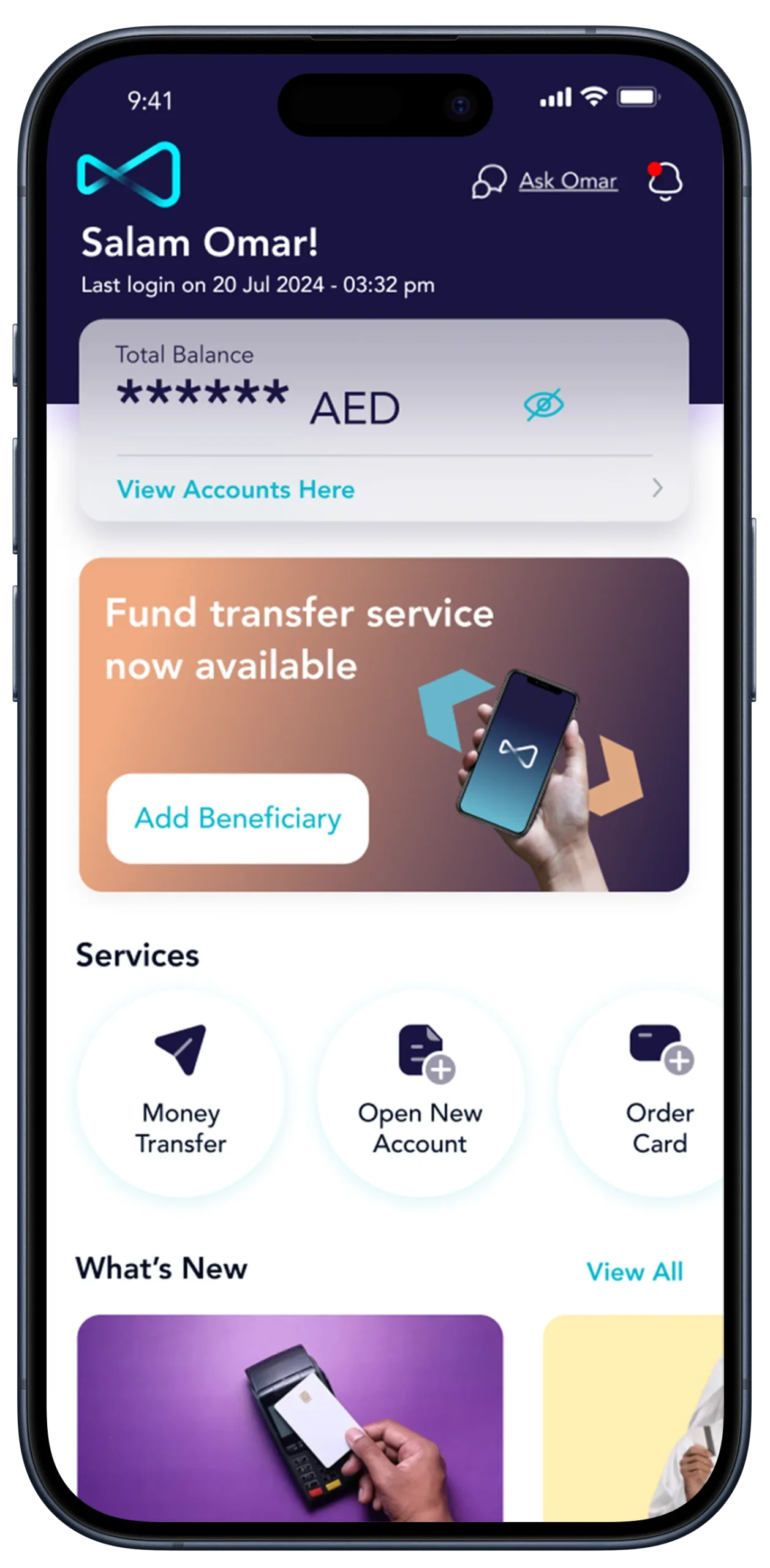
Founded in 2021, Al Maryah Community Bank, also referred to as Mbank, is a fully integrated digital bank in the UAE serving individual consumers, small businesses, and corporate clients. The bank offers a “free‑for‑life” current account and savings account, both with no documentation, no minimum or average balance requirements, no salary prerequisites, and complimentary debit cards, e‑statements, and cheque‑book services.
Mbank’s product suite includes virtual cards, payment solutions, minor‑account options, and the ability to invest in public offerings within the country. The bank’s digital platform enables self‑service features such as mobile check deposits and the printing of debit cards and checkbooks via multi‑functional kiosks located in its physical innovation centers across the UAE. These centers complement the next‑generation mobile app and website, ensuring an omnichannel presence that keeps the customer at the centre of the experience.
Mbank relies on an extensive partnership strategy to expand its portfolio of innovative products. In January 2026, Mbank signed a memorandum of understanding with Network International to enable regulated stablecoin payments in the UAE through AE Coin acceptance. The collaboration will integrate AE Coin into Network International’s point‑of‑sale (POS) and e‑commerce platforms, allowing merchants to accept AE Coin through the AEC Wallet across both physical and digital channels.
Wio Bank
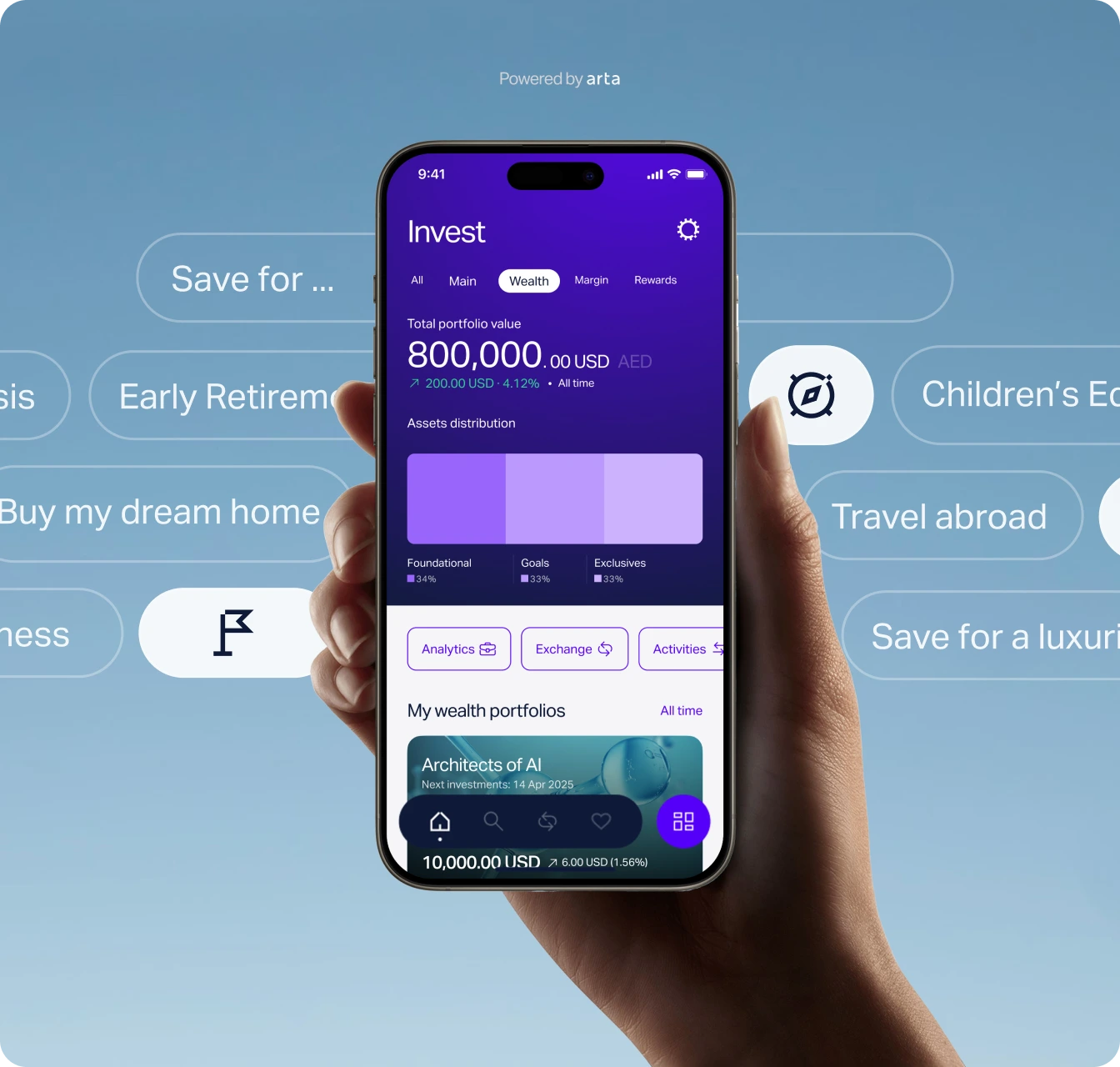
Launched in 2022 and headquartered in Abu Dhabi, Wio Bank is a licensed digital‑first financial institution backed by strategic investors that include ADQ, Alpha Dhabi Holding, e&, and First Abu Dhabi Bank. The bank aims to unify personal and business banking on a single, customer‑centric platform that helps users meet their financial goals.
For personal banking, Wio Bank offers a personal account that can be opened in minutes, multi‑currency balances, smart tools and insights, as well as investment services across 3,000 stocks, exchange-traded funds (ETFs), and cryptocurrencies. Additional perks include no foreign‑exchange fees, 1% cashback on international debit transactions, instant access to the card via Apple Pay or Google Pay, customizable virtual cards, and the ability to earn cashback in cash, a savings account, or selected stocks.
For businesses, Wio Bank provides a digital platform that scales with growth, offering banking‑as‑a‑service (BaaS) and embedded finance solutions. In January 2026, the bank launched the UAE’s first account tailored for content creators, providing a free 12‑month business account, no minimum balance, automated invoicing, unlimited virtual cards, multi‑currency balances and a guaranteed AED/USD rate for cross‑border work.
Wio Bank, which achieved its first year of profitability in 2024, was named among Forbes Middle East’s Fintech 50 2025 list, which recognized the region’s leading trailblazers in the digital financial services sector.
This year, Wio Bank plans to launch a payments company to make “things seamless for our customers,” Wio Bank CEO Jayesh Patel told Reuters in December 2025. It will also focus on ways to help its wealth clients “manage their long-term money better.” Patel said that the bank currently serves over 250,000 retail customers and more than 120,000 business clients, including firms from the UK and China, up from 140,000 and 90,000, respectively at the end of 2024.
Zand Bank

Founded in 2018 and based in Dubai, Zand Bank is an artificial intelligence (AI)-powered bank established to support the digital economy. A fully licensed all-digital bank and cryptocurrency custodian in the UAE, Zand Bank positions itself as an institution that bridges traditional finance (TradFi) and decentralized finance (DeFi) for corporate, institutional, fintech and wealth clients both in the UAE and globally.
Zand Bank’s product suite includes transaction banking, digital asset custody, the Zand AED stablecoin, the ZandPay point-of-sale (POS), commercial escrow services, and real estate escrow services. More products are in the works including treasury and foreign exchange (FX) services for regional and multinational corporates, conventional and alternative investment products as well as AI-powered investment research services for the affluent segment, and an environmental, social and governance (ESG) data solution.
Zand Bank relies on strategic partnerships to expand its product offering. One such partnership is with Taurus, a digital asset infrastructure provider from Switzerland. This collaboration focuses on issuance, wallets, smart contracts, compliance, and tokenization capabilities.
In August 2025, Zand Bank partnered with Mastercard to integrate Mastercard Move’s cross‑border money‑movement solutions, enabling deposits, wallet funding and cash‑pick‑up services in multiple markets. In January 2026, it teamed up with Yuze, which provides a digital business banking platform that combines payment tools with intelligent business‑management features. The collaboration focuses on providing Zand Bank’s customers with digital business accounts, IBANs and advanced banking tools, streamlining onboarding and supporting growth.
Zand Bank’s ownership structure includes a 55% stake held by Al Hail Holding, with additional 10% holdings each by Emirates NBD, Templeton International, and Lulu Group founder Yusuff Ali. The bank’s growth strategy focuses on organic expansion, niche propositions and collaborations with leading fintech players.
Zand Bank is now planning to expand to other markets in the Gulf and Africa within the next three years to boost growth and diversify its product offerings, its chief executive, Michael Chan, told The National in December 2025. The digital lender has already been approached by several African banks and financial institutions in the Gulf region for joint ventures and partnership.
Featured image: Edited by Fintech News Middle East, based on image by RSplaneta via Freepik
